Changsha CR Land Runfu
Changsha, China, 2023
Application: Residential Lighting
Product: LANDSCAPE
Model: DECK 19
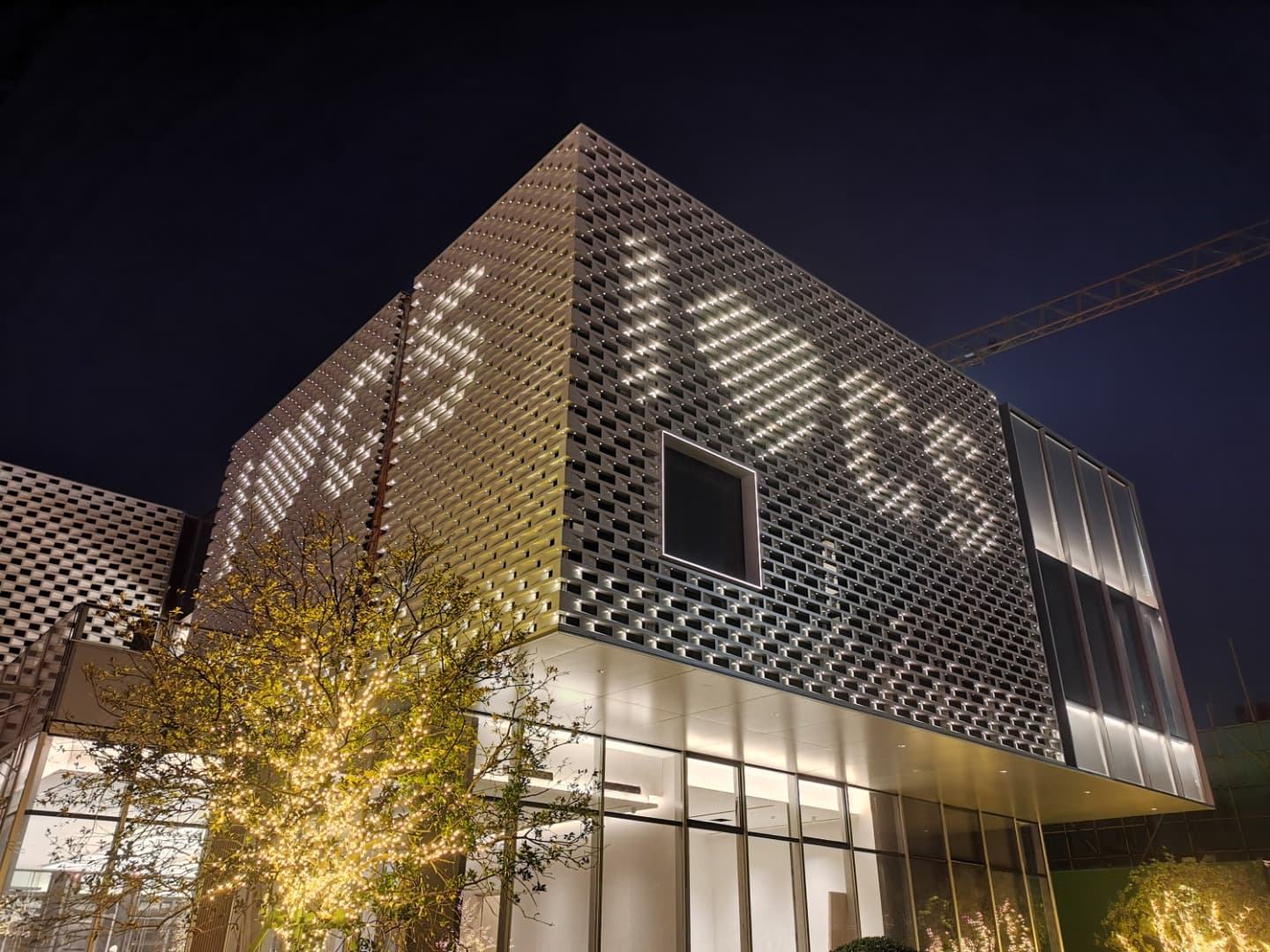
Situated in Changsha, the CR LAND Center represents a striking integration of contemporary architectural form and textured facade engineering. The building’s envelope features a complex, three-dimensional masonry pattern of interlocking white blocks, creating a rhythmic play of light and deep shadow. Rather than relying on a continuous, high-glare exterior wash that would flatten the building's volumetric depth, the design utilizes an integrated, low-profile matrix solution to accentuate the structural relief of the masonry.
To animate this geometric skin after dark, 1,800 units of LUCITAG Deck 19 (Mono / Pure White) were embedded directly into the open geometric cavities of the brickwork layout. Each point-source luminaire is completely concealed within the individual recessed niches along the architectural facades. By utilizing a pure white color temperature, the fixtures cast a crisp, localized glow that reflects off the inner angled faces of the blocks, turning the textured surface into a high-contrast structural tapestry.
Operating on a high-speed DMX protocol, the addressable points transform the massive cubic form into an intelligent, programmable low-resolution canvas. The DMX control allows for low-latency brightness manipulation, enabling subtle, organic gradients and fluid, shimmering movements across the facade without disrupting the underlying architectural order. By pairing precise optical control with a monochromatic palette, the installation keeps the hardware hidden, emphasizing the depth, volume, and modern materiality of the building envelope from any viewing distance.
To animate this geometric skin after dark, 1,800 units of LUCITAG Deck 19 (Mono / Pure White) were embedded directly into the open geometric cavities of the brickwork layout. Each point-source luminaire is completely concealed within the individual recessed niches along the architectural facades. By utilizing a pure white color temperature, the fixtures cast a crisp, localized glow that reflects off the inner angled faces of the blocks, turning the textured surface into a high-contrast structural tapestry.
Operating on a high-speed DMX protocol, the addressable points transform the massive cubic form into an intelligent, programmable low-resolution canvas. The DMX control allows for low-latency brightness manipulation, enabling subtle, organic gradients and fluid, shimmering movements across the facade without disrupting the underlying architectural order. By pairing precise optical control with a monochromatic palette, the installation keeps the hardware hidden, emphasizing the depth, volume, and modern materiality of the building envelope from any viewing distance.