Tian Di Hui Cui
Wuhan, China, 2018
Application: Building Façade, Commercial
Product: STRIP
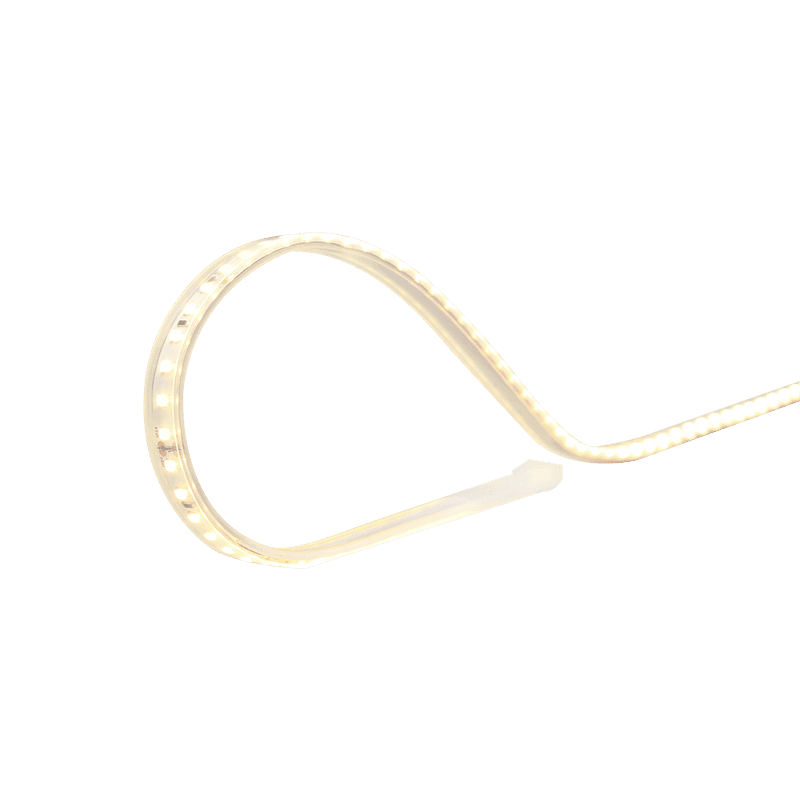
Model: FLEX MILKY SLIM TOP BENDED, FLEX STRIP
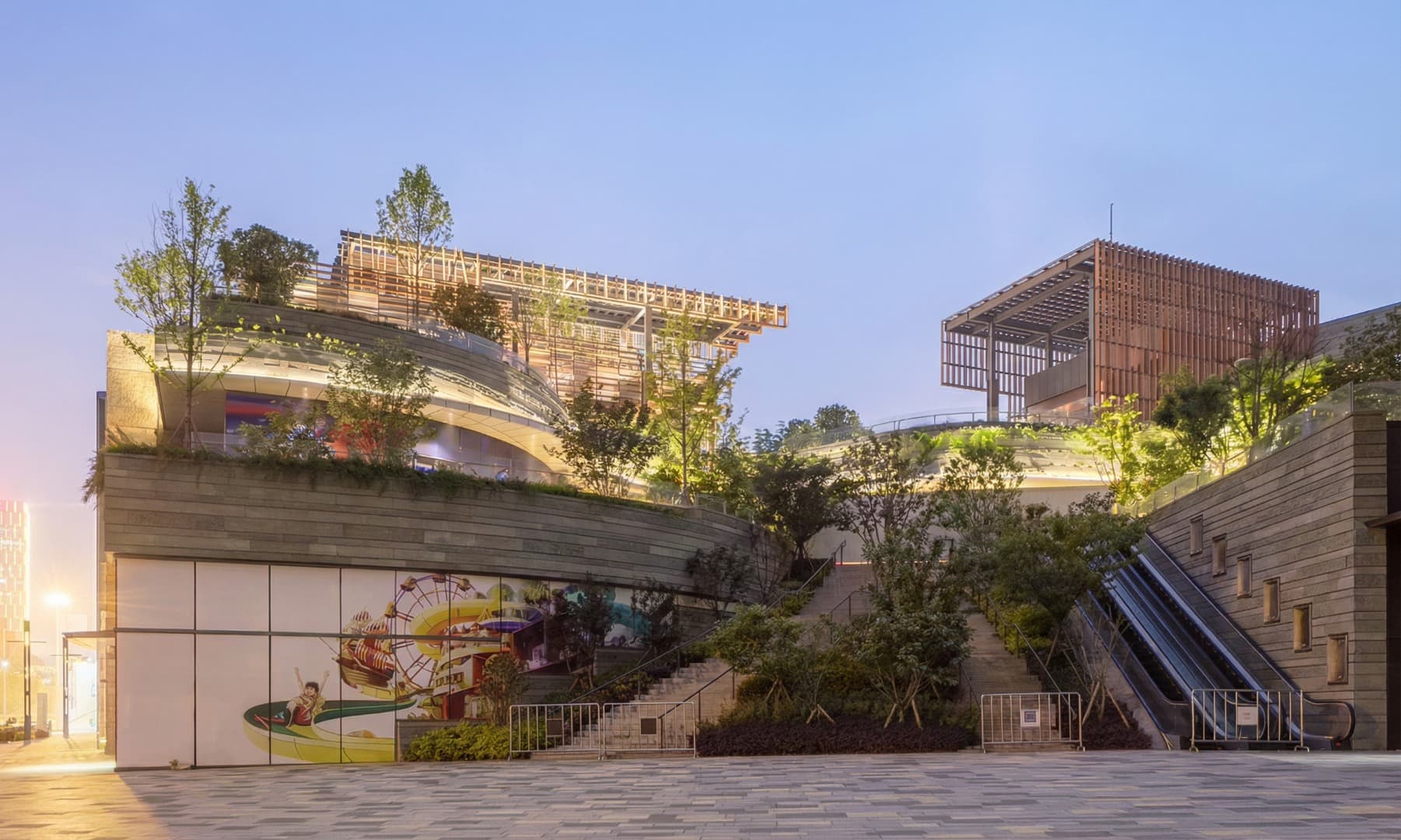
The architectural lighting scheme for Tian Di Hui Cui in Wuhan defines a layered terraced landscape that integrates commercial programs with elevated green roofs and open public circulation. Shaped by sweeping stone retaining walls, organic pathways, and timber pavilion structures, the development relies on a restrained lighting approach that avoids visual dominance. Instead, a continuous layer of pure white indirect illumination is introduced to articulate terrain, reveal elevation shifts, and guide movement across the multi-level environment while preserving the natural character of the architecture.
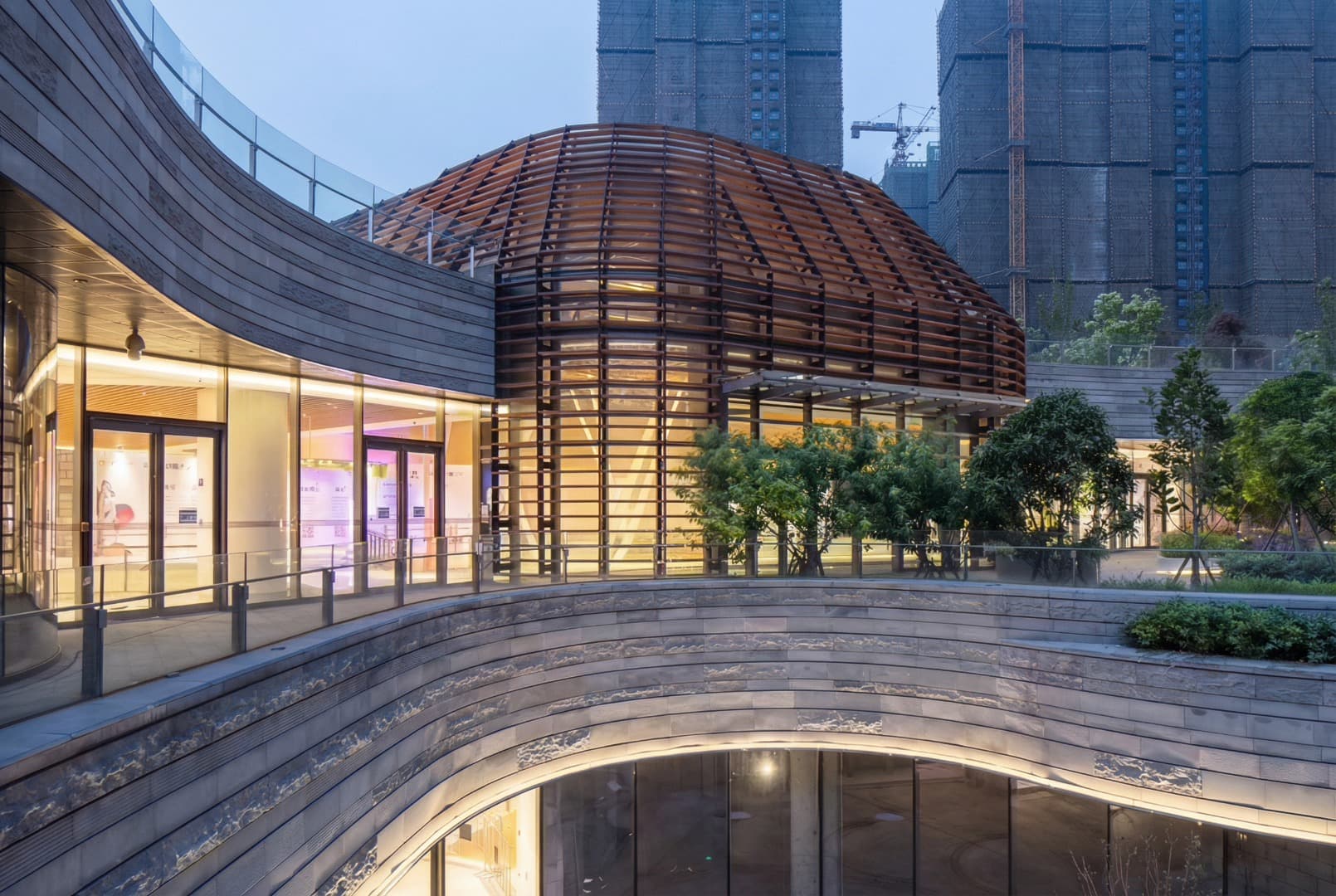
To articulate the complex topography of the terraced site, 311 meters of LUCITAG Strip Flex Slim Top Bend modules are integrated within recessed perimeter channels that follow the flowing geometry of planters, steps, and curved walkways. The top-bending configuration enables seamless adaptation to continuous curves, allowing the lighting line to track the landscape without interruption. Operating in a pure white spectrum, the concealed linear system produces a soft downward wash that defines edges and reveals changes in elevation. This continuous line of light enhances spatial legibility across the site, ensuring clear orientation along paths and stepped transitions while maintaining a discreet architectural presence during daytime conditions.
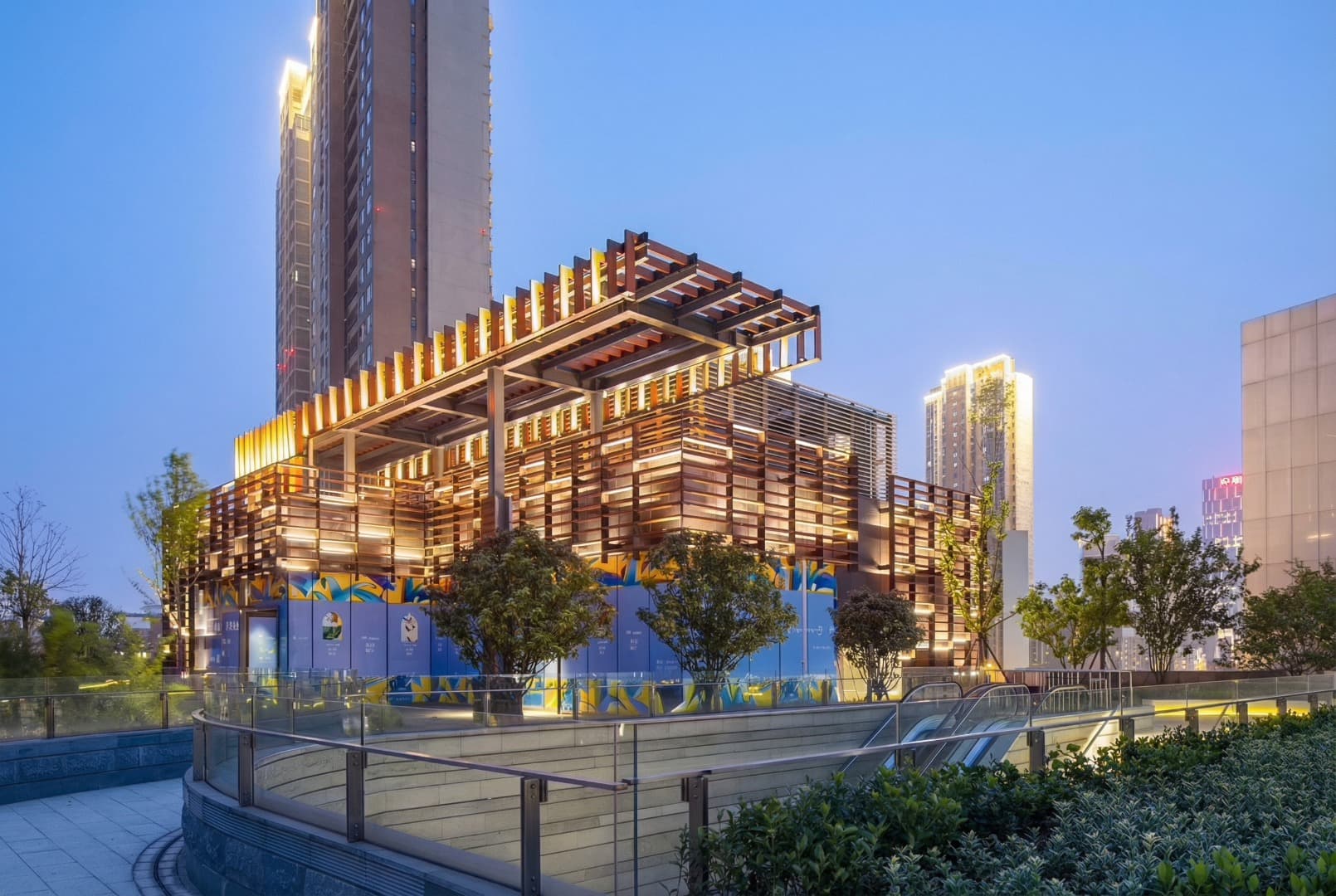
Complementing the landscape contours, 280 meters of LUCITAG Strip Flex linear modules are integrated within the timber pavilions and upper-level architectural elements. Positioned to emphasize structure rather than surface brightness, the system introduces subtle backlighting to slatted screens, glazed volumes, and exposed framing. This controlled illumination reinforces the geometry of the built forms while maintaining visual balance with the softer landscape lighting below. The result is a cohesive nocturnal composition where architectural elements and terrain are read as a unified system, connected through a consistent white-light language that clarifies hierarchy without overpowering the natural setting.