
CASE STUDY: Human-Centric Illumination for Next-Generation EV Charging Infrastructure
1 August 2026
Application: Smart Mobility & Automated EV Charging Infrastructure
Key Technologies: Custom Pixel LED Integration, Matrix Pixel Control on Dual-Curving Surfaces, Dynamic RGBW Matrixing, High-Frequency Flicker-Free Driver Architecture
Role: Optical Systems Engineering & Dynamic Lighting Control
Key Technologies: Custom Pixel LED Integration, Matrix Pixel Control on Dual-Curving Surfaces, Dynamic RGBW Matrixing, High-Frequency Flicker-Free Driver Architecture
Role: Optical Systems Engineering & Dynamic Lighting Control
1. The Design Challenge
As EV charging evolves from static parking infrastructure into automated, sensor-driven environments, the role of site lighting has shifted with it. Conventional commercial luminaires often produce glare hot spots or fail to offer responsive visual feedback — creating a disconnect between advanced vehicle systems and the people interacting with them.
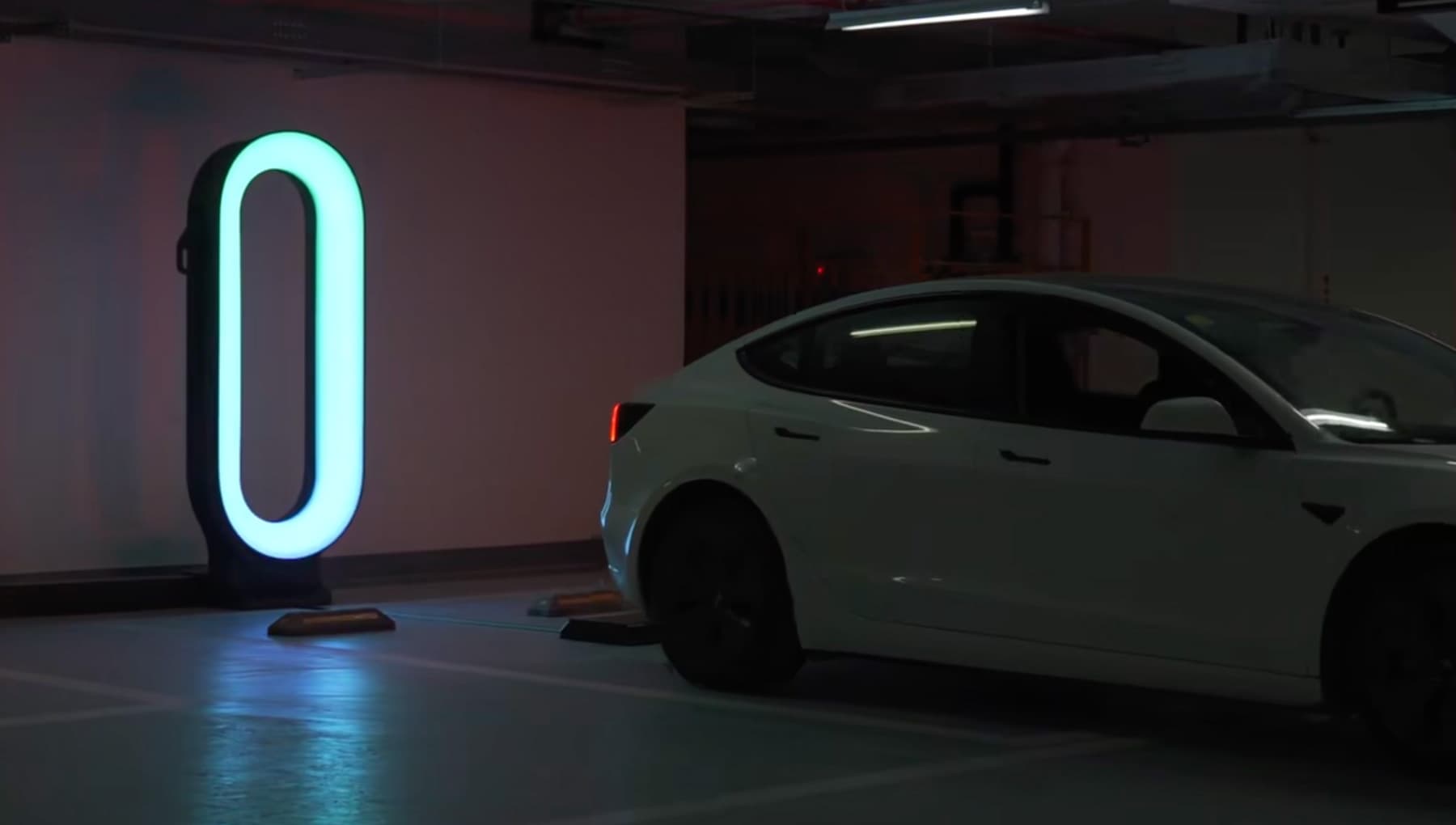
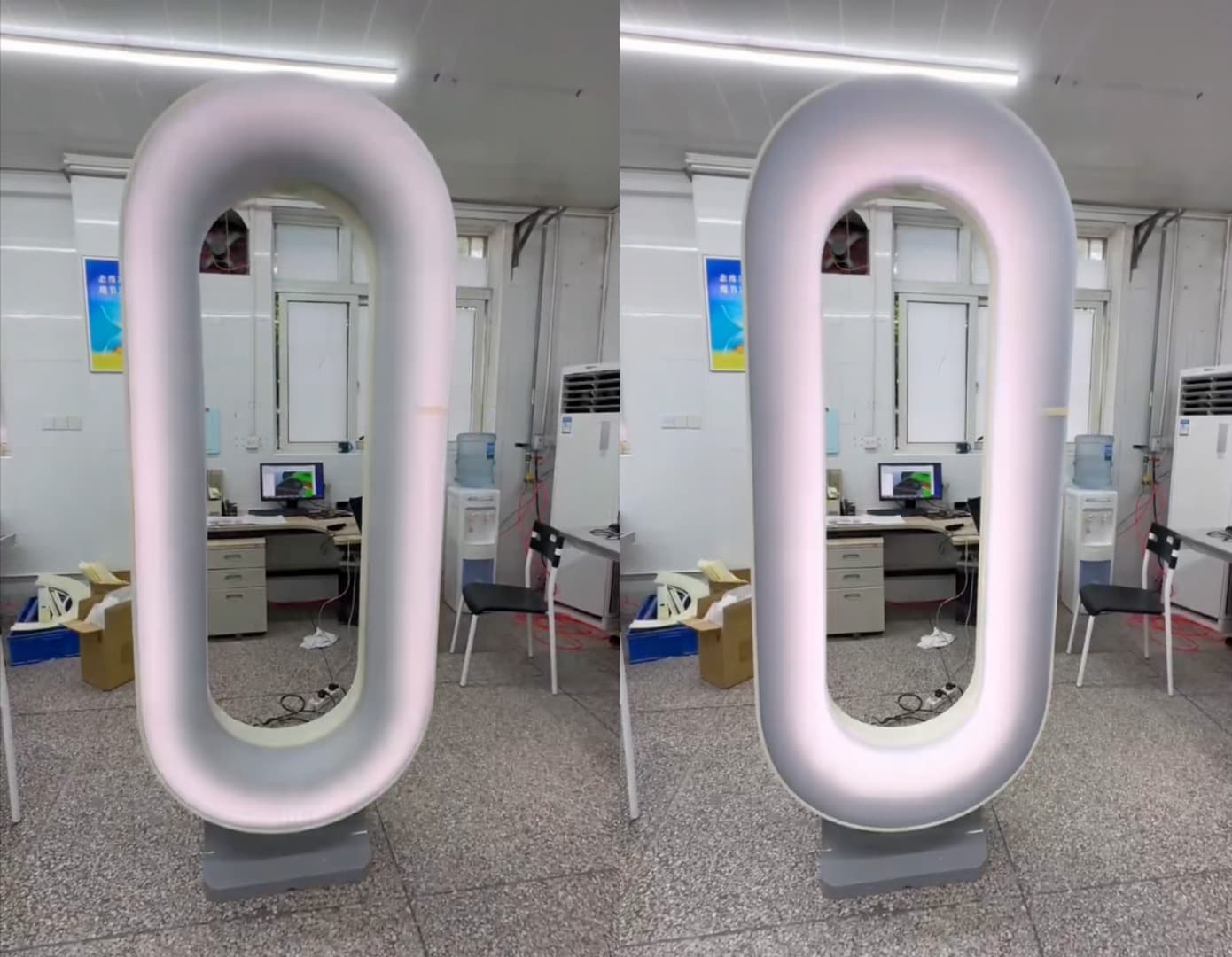
Curved forms have traditionally given architectural lighting a sense of softness and refinement. Here, that same design language was asked to do more — carrying the visual identity of a high-tech, sensor-driven product. The core engineering challenge was geometric: the halo unit's form is a dual-curving surface, curved along two axes simultaneously rather than one. This presented two compounding problems:
· Physical assembly — a standard rigid PCB cannot conform to a dual-curving profile. Mounting flat, rigid boards onto a compound curve introduces visible seams, uneven pixel spacing, and structural stress on the components.
· Visual consistency — even where mounting is achieved, maintaining even color consistency and color smoothness across a compound curve is significantly harder than on a flat or single-axis curved surface, since viewing angle, pixel pitch, and light mixing distance all shift continuously across the form.
Our objective was to engineer a custom halo light engine that could physically conform to this dual-curving geometry while performing three roles simultaneously:
· Deliver smooth, dot-free ambient lighting with consistent color and brightness across the full compound curve.
· Serve as a dynamic communication interface, reflecting real-time charging status and vehicle connection state.
· Maintain consistent optical performance across both human vision and onsite camera systems.
As EV charging evolves from static parking infrastructure into automated, sensor-driven environments, the role of site lighting has shifted with it. Conventional commercial luminaires often produce glare hot spots or fail to offer responsive visual feedback — creating a disconnect between advanced vehicle systems and the people interacting with them.
Curved forms have traditionally given architectural lighting a sense of softness and refinement. Here, that same design language was asked to do more — carrying the visual identity of a high-tech, sensor-driven product. The core engineering challenge was geometric: the halo unit's form is a dual-curving surface, curved along two axes simultaneously rather than one. This presented two compounding problems:
· Physical assembly — a standard rigid PCB cannot conform to a dual-curving profile. Mounting flat, rigid boards onto a compound curve introduces visible seams, uneven pixel spacing, and structural stress on the components.
· Visual consistency — even where mounting is achieved, maintaining even color consistency and color smoothness across a compound curve is significantly harder than on a flat or single-axis curved surface, since viewing angle, pixel pitch, and light mixing distance all shift continuously across the form.
Our objective was to engineer a custom halo light engine that could physically conform to this dual-curving geometry while performing three roles simultaneously:
· Deliver smooth, dot-free ambient lighting with consistent color and brightness across the full compound curve.
· Serve as a dynamic communication interface, reflecting real-time charging status and vehicle connection state.
· Maintain consistent optical performance across both human vision and onsite camera systems.
2. Optical & Technical Solution
Matrix Pixel Integration on Dual-Curving Surfaces
To solve the assembly constraint, we moved away from rigid board architecture entirely, developing a matrix pixel layout capable of physically conforming to the halo unit's dual-curving form — enabling accurate pixel placement and structural integrity across a compound curve that a rigid PCB could not achieve.
Color Consistency & Color Smoothness Engineering
Maintaining uniform color and brightness across a dual-curving surface required precise control over pixel density, mixing distance, and viewing-angle behavior at every point on the curve. The result is smooth, consistent color output with no visible banding, hot spots, or inconsistency as the surface curves away from the viewer.
Matrix Pixel Integration on Dual-Curving Surfaces
To solve the assembly constraint, we moved away from rigid board architecture entirely, developing a matrix pixel layout capable of physically conforming to the halo unit's dual-curving form — enabling accurate pixel placement and structural integrity across a compound curve that a rigid PCB could not achieve.
Color Consistency & Color Smoothness Engineering
Maintaining uniform color and brightness across a dual-curving surface required precise control over pixel density, mixing distance, and viewing-angle behavior at every point on the curve. The result is smooth, consistent color output with no visible banding, hot spots, or inconsistency as the surface curves away from the viewer.
Pixel-Accurate RGBW Matrixing
Rather than static color zones, the system uses high-density, individually addressable pixel control, enabling smooth, pixel-accurate transitions across the full RGBW spectrum. Gradient wave animations indicate standby availability, active charging, and completion states with clear, low-glare visual cues.
Flicker-Free Driver Architecture
Because automated charging hubs rely on camera-based monitoring, we integrated a high-frequency PWM driver architecture engineered to stay above the flicker threshold detectable by both machine vision systems and the human eye — preventing camera distortion while maintaining visual comfort for drivers and pedestrians on site.
Rather than static color zones, the system uses high-density, individually addressable pixel control, enabling smooth, pixel-accurate transitions across the full RGBW spectrum. Gradient wave animations indicate standby availability, active charging, and completion states with clear, low-glare visual cues.
Flicker-Free Driver Architecture
Because automated charging hubs rely on camera-based monitoring, we integrated a high-frequency PWM driver architecture engineered to stay above the flicker threshold detectable by both machine vision systems and the human eye — preventing camera distortion while maintaining visual comfort for drivers and pedestrians on site.

3. Engineering Outcomes
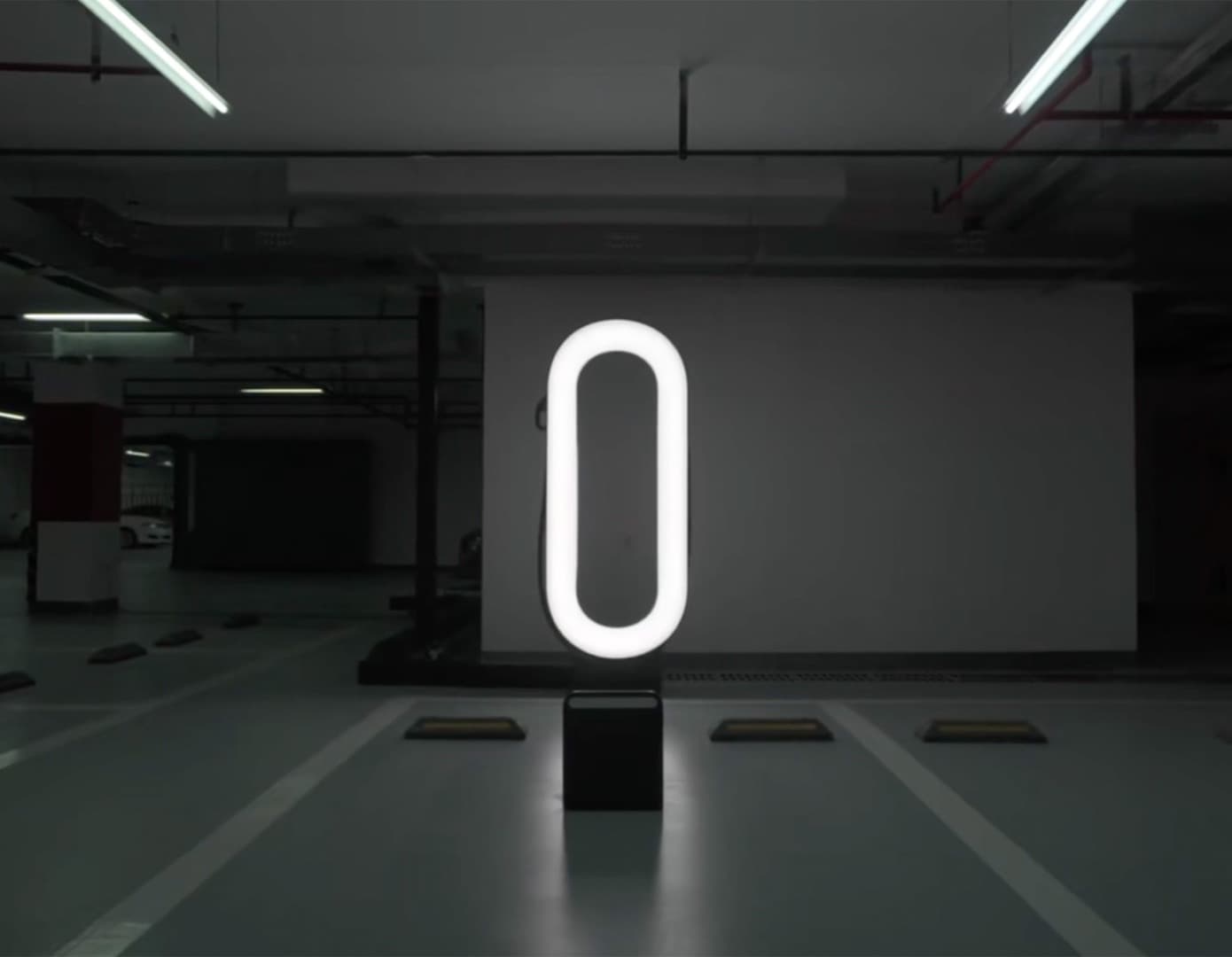
The result is a light engine that achieves what rigid electronics alone could not: full physical conformity to a dual-curving surface, with consistent color and brightness maintained across the entire compound curve. Pixel-level addressable control delivers smooth, dynamic visual feedback in real time, while the flicker-free driver architecture ensures the system remains fully compatible with onsite camera monitoring — all without compromising visual comfort for drivers and pedestrians in indoor and subterranean parking environments.
The result is a light engine that achieves what rigid electronics alone could not: full physical conformity to a dual-curving surface, with consistent color and brightness maintained across the entire compound curve. Pixel-level addressable control delivers smooth, dynamic visual feedback in real time, while the flicker-free driver architecture ensures the system remains fully compatible with onsite camera monitoring — all without compromising visual comfort for drivers and pedestrians in indoor and subterranean parking environments.
Conclusion
By treating light as an active architectural material rather than a functional afterthought, this project demonstrates pro-lighting engineering that crosses boundaries — between rigid electronics and organic form, between machine vision and human perception. The result is human-centric illumination that bridges technical utility with intuitive, people-first design, defining a new visual standard for automated mobility spaces.
For technical documentation or project specification inquiries, contact our engineering team.
By treating light as an active architectural material rather than a functional afterthought, this project demonstrates pro-lighting engineering that crosses boundaries — between rigid electronics and organic form, between machine vision and human perception. The result is human-centric illumination that bridges technical utility with intuitive, people-first design, defining a new visual standard for automated mobility spaces.
For technical documentation or project specification inquiries, contact our engineering team.
